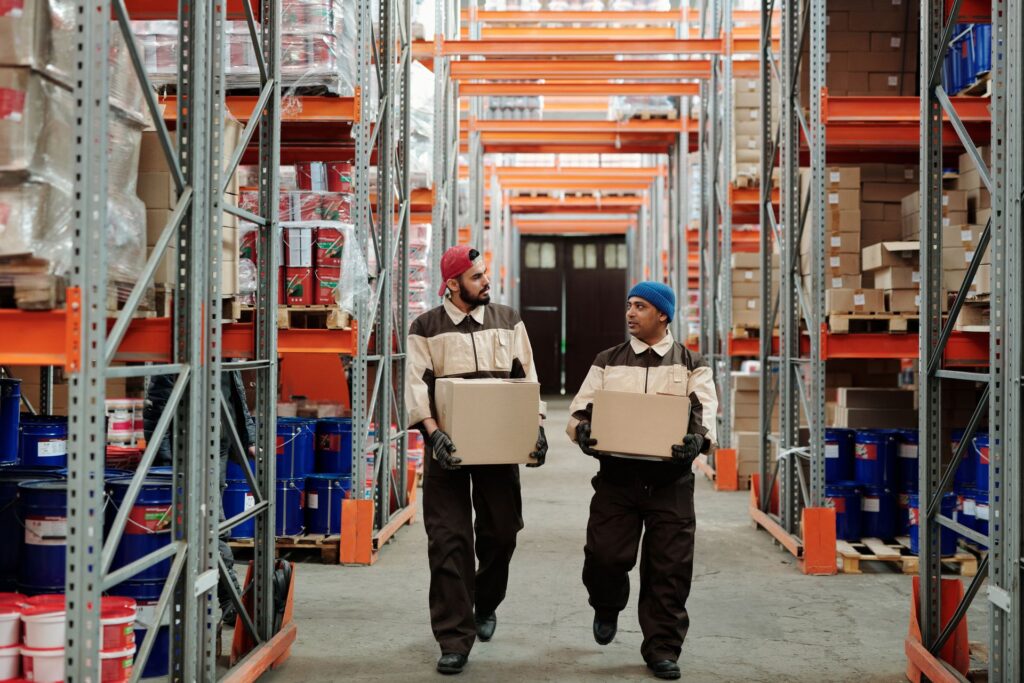
A new temp worker walks onto your floor at 7 a.m. Within the hour, they’re running your equipment next to your most trusted employees. Then the questions start. Did anyone train this person on our hazards? Who gave them that hard hat? If they get hurt, whose problem is it?
Those questions usually come up after the worker arrives and gets started, which is too late. Gaps in screening and training rarely show up on paper. They show up on-site.
The fix is a short conversation before the first shift. Here are eight safety questions to ask any staffing partner, plus what a solid answer should cover, so you can protect your business and everyone working on your site.
Who Is Responsible for Temporary Worker Safety?
Both of you. According to OSHA’s guidance on protecting temporary workers, the staffing agency and the host employer are joint employers, and they share responsibility for a safe workplace and proper training. Each one is expected to handle the hazards it’s in the best position to prevent and correct.
In practice, the split usually looks like this:
- The staffing agency typically covers general safety and health training, such as hazard recognition, how to report a problem, and workers’ rights.
- The host employer typically covers site-specific training on its own equipment, processes, and hazards, because it supervises the worksite day to day.
What Safety Questions Should You Ask a Staffing Agency?
1. How do you screen workers for this specific job?
You want a partner that takes safety as seriously as you do. Ask whether the agency only checked that a person could do the job in general, or whether it looked closely at job history, certifications, and experience with the exact tasks you need covered. If the role involves equipment, ask what proof of prior training the agency keeps on file.
2. What safety training happens before they arrive, and what’s ours to provide?
Get specific about who teaches what.
OSHA’s safety and health training bulletin for temporary workers says training has to be finished before the worker starts and delivered in words and a language the worker can understand.
Ask the agency how it confirms workers understood the material, not just that they sat through it. Then agree in writing on what you’ll cover on site and how each side will confirm training is complete.
3. Who provides PPE, and who replaces it?
If your work requires personal protective equipment (PPE), settle who supplies it. Some agencies provide basic PPE and leave specialized gear to you. Others don’t provide PPE at all.
OSHA’s PPE bulletin for temporary workers says the host employer usually has primary responsibility for selecting and supplying PPE, since it knows the hazards, while the agency should confirm the host is following through. Either way, workers can’t be required to buy their own required PPE or have the cost taken out of their pay. Ask who replaces damaged or worn-out gear during the assignment, because defective equipment shouldn’t be used.
4. Will you walk our site before placing workers?
Every job site has its own hazards. A reliable staffing agency will want to see yours before it sends anyone over, so it can match training and PPE to the work. OSHA notes that an agency can tour the site to learn the tasks and hazards involved. If an agency won’t visit, ask how it plans to learn what its workers will face.
5. How are injuries reported, and who records them?
No one wants an injury, but you need a plan for one. Under OSHA’s recordkeeping guidance for temporary workers, the employer that provides day-to-day supervision records the injury on its OSHA 300 log. That’s usually the host employer, even though the staffing agency employs the worker. Each case goes on only one employer’s log.
Ask the agency how it wants to be notified when something happens and how it will share what it learns afterward. OSHA recommends that both sides tell each other about any injury or illness and write those notification steps into the contract.
6. How Can Workers Report a Hazard, and Who Do They Call?
Workers should know they can raise a safety concern with you, the staffing agency, or both, and exactly who to call at each. Ask what contact the agency gives its workers and how quickly it responds. Temp workers also have the right to report hazards to OSHA, and OSHA’s whistleblower protection bulletin says either joint employer can be held responsible for retaliating against a worker who speaks up. A partner that treats hazard reports as useful information, not a nuisance, is the one you want.
7. What Happens If Job Duties Change Mid-Assignment?
New tasks bring new hazards. Picture a worker placed to stage pallets who gets asked to cover a forklift shift when someone calls out. That’s a different job with different training requirements. Ask whether the agency wants to hear about duty changes before they happen, and agree on how any added training gets done before the worker starts the new task.
8. How Do You Check In After Day One?
Day one is the start, not the finish line. Ask how often the agency will check in with you and with its workers, and who your point of contact is. OSHA encourages staffing agencies to stay in frequent contact with both the workers and the host, so problems get caught early. Plan follow-up visits, especially during the first few weeks of a new placement.
What Red Flags Should You Watch for in a Staffing Partner?
Some answers tell you a staffing agency doesn’t take safety training seriously.
Be cautious if an agency:
- Gives vague answers about its training
- Shows no interest in visiting your site before placing workers
- Tries to make you responsible for every safety duty
- Can’t explain its injury reporting process
- Expects workers to bring or pay for their own required PPE
Any one of these is a sign that safety will end up being your problem alone.
Ask HireQuest Direct These Questions First
The best time to fix a safety gap is before the first shift starts. Every HireQuest Direct temporary staffing office can answer every question on this list, from screening and orientation to injury reporting, before we place a single worker. We also conduct routine safety walks on jobsites, and will flag concerns up front.
Find an HQD office near you or tell us about the workers you need.
Frequently Asked Questions
Does HireQuest Direct provide PPE for temporary workers?
HireQuest Direct offices often provide basic PPE for temp employees. That can include hardhats, reflective safety vests, and safety glasses.
If your jobsite or a specific role requires specialized PPE, we encourage you to discuss these needs early in our staffing conversation so that we can ensure our team members are compliant from Day 1, regardless of who supplies the PPE.
Do HireQuest Direct offices maintain OSHA 300 logs?
HireQuest Direct offices are compliant with OSHA’s recordkeeping requirements, including the OSHA 300 Log. From February 1 through April 30, each office displays a record of injuries and illnesses that occurred on office premises the previous calendar year, as required by OSHA.
What type of safety training does HireQuest Direct provide?
Our #1 responsibility to our employees is to keep them safe at work. To that end, HireQuest Direct offices provide regular Tool Box Talks to temporary employees. Many offices also provide additional safety certification training as well as customer-specific safety trainings and orientations on an as-needed basis.
How can HireQuest Direct temporary employees report safety concerns?
Our staffing offices are committed to building a safety culture. In addition to our incident/injury reporting process, we encourage all our employees to speak with our office team about any concerns they have on-site, whether it concerns their safety, the scope of their work, or any other issue.
All employees can also report safety concerns directly to OSHA as well as their host employer.